


Where to start with Macrame Cords
Updated: Feb 19
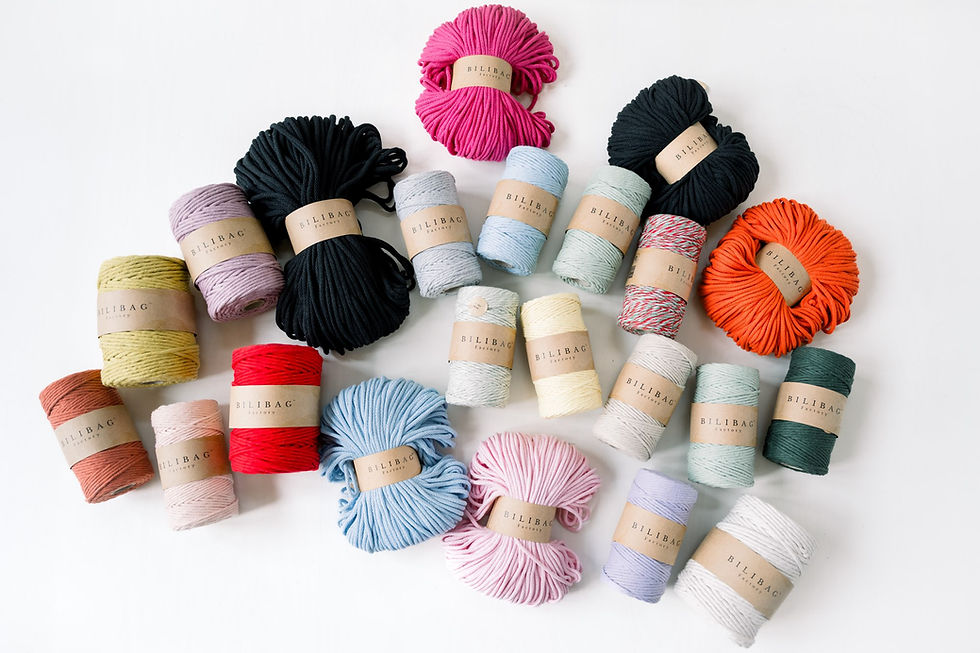
Wanting to start macrame, but have no idea where to start with cords?
Then panic no more, this blog post is for you!
It can be quite daunting to choose what cord to buy when you are starting your macrame journey, mainly because we are absolutely spoilt for choice and it can be quite overwhelming.
When it comes to choosing the perfect cord to work with, it very much depends on a number of things:
What the cord is being used for
How experienced you are
What material you want to work with
For the very beginner macrame artist, I would suggest using a braided cord. A braided cord is a strong cord which won’t fray at the end, so it’s perfect for practicing your knots as it doesn’t mind being undone.
I love using braided cord for things like plant hangers where the cord is strong enough to hold plants. It’s also fantastic for really large projects that need a lot of cord, this is because eventually as you use it, single twist cord will get messy and untwisted if you’re using a long length, whereas braided cord stays braided.
Another really good cord for beginners is a rope, which is usually 3ply and can be unravelled at the end. This is a good cord to use because it has strength, but it will unravel as you use it. This is so good for a project where you need a strong cord but want to be able to brush the ends out for a fluffy fringe.
A good cord to use for smaller projects is a single twist cord which is made using multiple fibres all twisted into one single cord.
I use twisted cord for beginner projects that are small like keyrings or little decorations because they are easy to brush out at the end, and won’t become too untwisted when being used.

Practice makes improvement when it comes to macrame, and I would say the same for working with different types of cords.
Experience means you’ll find the way that works for you in terms of how you handle the cords and make them work for you.
Funnily enough, I actually started my macrame journey using ropes and single twist cords and didn’t find out about braided cords until much later. I would always steer away from braided because I absolutely adore the look of fluffy fringes. But actually, since trying braided cords, they’ve quickly become my favourite because of their strength, versatility and the structure they give to macrame wall hangings. Plus you can always add single twist cords in at the end for a bit of fluff and texture!

Now let’s talk about materials.
Back in the 70s and 80s, macrame artists would use natural materials such as jute, hemp, and cotton for their cords. Nowadays we still use these materials but there is a much bigger range in terms of materials and colours.
Some cords can be much cheaper, but these don’t tend to be as good quality. They might not hold their shape well, or be really flimsy to work with.
Some cords are a cotton/polyester mix, and there’s nothing wrong with using these, but some artists like to try and steer away from artificial materials to be more eco friendly.
It totally depends on your values and ethics. I personally prefer to use 100% recycled cotton cords which have been produced in the UK so that I am supporting a business in my own country whilst keeping my carbon footprint lower.
There are a lot of cord suppliers overseas which produce some stunning cords, but then you have to weigh up the cost of importing, on your bank balance, and on your carbon footprint.
Another cord which is more recently being produced is bamboo cord. This is a very luxurious cord, it’s so shiny and soft to work with. This is also an eco friendly cord, usually sold as single twist, and is great for adding fluffy fringes to projects.

I think as a take away from this blog post, I would suggest getting yourself some samples and try some knots out with all sorts of cord. This will be the best way to get a feel for them and see what you like working with. Attending workshops would be a great way to do this, so that you don’t have to pay to order lots of different types of cords.
I have lots of workshops and clubs on offer at GemMacrame Studio, so why not take a look and book yourself on something fun!
Plus I have lots of cords available for sale on my website - linked below - and it’s at the studio if you want to come in for a little look and feel!
I hope you found this blog post helpful and informative. If you have any questions please add them in the comments, and I’ll see you on the next one!
💛
Enjoy reading this blog post? You can support me by leaving a tip using the link below 🫶🏻


Comments